
🛡️ Digital Dharma Lesson 5: Teaching Kids Cyberbullying Safety | RandomTyms
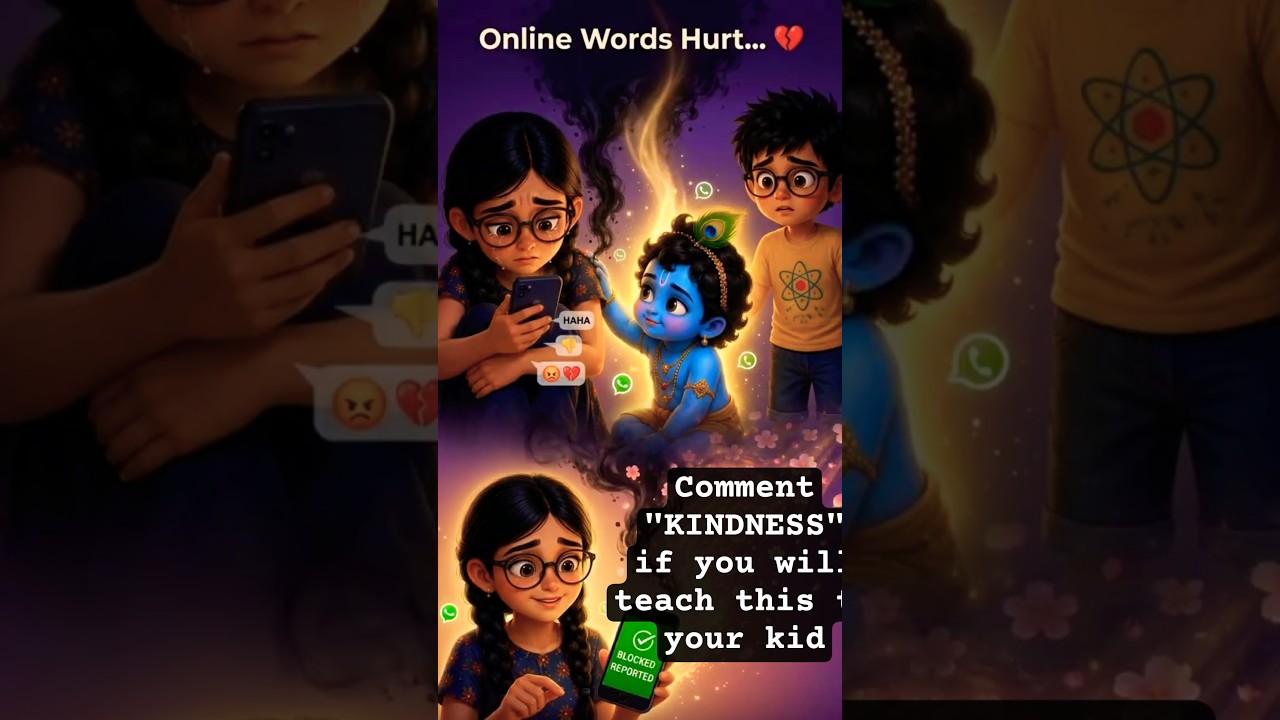
The Core Lesson: Words typed on a screen have real-world impact. Krishna explains how to handle digital negativity and stand up for others online.
Digital Dharma · Lesson 5
🛡️Shield Against Shadows: Overcoming Cyberbullying & Online Harassment
The internet allows us to connect with millions, but it also creates a digital shield that some use to spread negativity. In this final lesson of our Digital Dharma series, Lokesh and Varsha learn from Krishna how to protect their emotional peace, stand up for others, and deal with online harassment with wisdom and grace.
Understanding the Source of Online Cruelty
The lesson opens with a painful but common milestone for young content creators: Lokesh receives a deeply unkind comment on one of his videos and asks why people behave so cruelly online.
Krishna explains the psychology behind cyberbullying. When hidden behind a digital screen, people often lose their sense of empathy and forget that real hearts read their words. He reassures Lokesh that an anonymous user's cruelty is merely a reflection of their own inner turmoil and unhappiness — it has absolutely no bearing on his true worth.
Standing Up to Adharma in Digital Spaces
Varsha poses a crucial question about digital citizenship, asking what the right course of action is when witnessing someone else being targeted or bullied in a group chat.
Krishna emphasizes that choosing silence when witnessing adharma (injustice) is a choice that allows harm to continue. Instead of ignoring the situation, users should act as a shield for those who are hurt:
- Support the Victim
Openly stand by your friend so they know they are not alone. - Report the Behavior
Use the platform's reporting tools to flag the abusive language. - Involve Elders
Immediately seek the intervention of a trusted teacher or parent.
The Danger of Fighting Fire with Fire
Hurting from the comment, Lokesh asks if he should reply with a mean message of his own to defend his honor.
When Do "Jokes" Become Bullying?
Varsha seeks clarity on subtle forms of harassment, asking if a simple joke or a mocking emoji can be classified as bullying if it hurts someone's feelings.
Words and symbols hold immense power. If a joke causes pain and is repeatedly targeted at an individual, it crosses the line into harassment. True humor brings joy to everyone in the room; if it causes sorrow to even one person, it is no longer a joke.
Spreading Light Across the Web
Finally, Lokesh asks how a young person can actively make the internet a better place.
A shield does not strike back — it simply stands firm, and lets kindness light the way forward.
Comments
Post a Comment