
🛡️Digital Dharma Lesson 6: Managing Kids' Screen Time Balance | RandomTyms
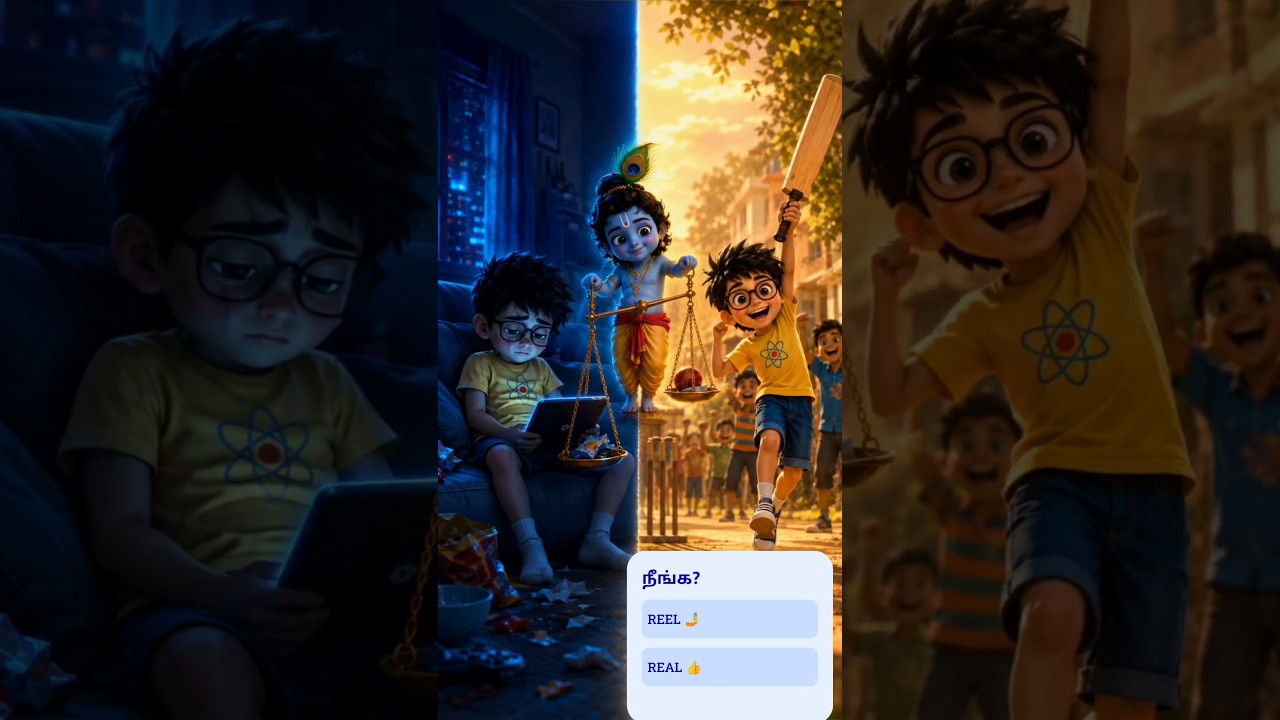
Digital Dharma · Lesson 6
🛡️The Middle Path: Managing Screen Time & Digital Well-being
Technology provides endless worlds to explore, but spending too much time in digital spaces can take a toll on our minds and bodies. In this lesson of our Digital Dharma series, Lokesh and Varsha learn from Krishna how to find a healthy balance between their screens and the real world.
The Source of Screen-Induced Mood Swings
The discussion opens with a feeling many children experience but don't quite understand. Lokesh asks why he feels so grumpy, restless, and irritated after playing video games for a long period of time.
Krishna explains that the mind, just like the body, requires strict balance to function well. Spending hours staring into a screen disconnects a child from the physical earth, fresh air, and their own natural physical energy. That post-game grumpiness isn't just a mood — it is a child's mind actively crying out for rest and a change of environment.
Recognizing the Signs to Unplug
Varsha looks for a practical rule of thumb, asking how a young person can identify the exact moment it is time to turn off their devices.
Krishna advises children to tune back into the natural rhythm of the day and listen to their physical bodies. There are clear, built-in signals that indicate it is time to log off:
- Physical Fatigue When your eyes begin to feel heavy, strained, or tired.
- Physical Stagnation When you realize you have been sitting completely still for hours.
- Environmental Cues When the sun is shining outside, inviting you to step away.
When these signs appear, it is time to close the screen and open up your real life.
The Hidden Danger of Nighttime Screen Habits
Lokesh asks about another incredibly common habit: checking a phone or tablet right before heading to bed.
Balancing the Digital Tool with the Real World
Varsha asks for a strategy to balance necessary online learning with meaningful real-world activities.
The secret is to ensure technology remains a helpful tool, never a master. After a period of digital studying, children should immediately shift their focus to tactile, physical creation — such as drawing, playing an outdoor sport, or having face-to-face conversations with family. The digital and physical worlds should support one another, not compete.
Overcoming the Fear of Missing Out (FOMO)
Finally, Lokesh shares a common worry among kids, asking if he will miss out on important things if he consciously chooses to spend less time online.
Krishna offers a beautiful perspective on what is truly valuable. While reducing screen time might mean missing a fleeting digital joke or an online trend, the trade-off is infinitely greater.
Technology is a tool to hold, not a master to serve — walk the middle path, and let your feet touch the ground.
Comments
Post a Comment