
The Magic of Raincoats: Why Water Rolls Off Some Fabrics and Soaks Others!
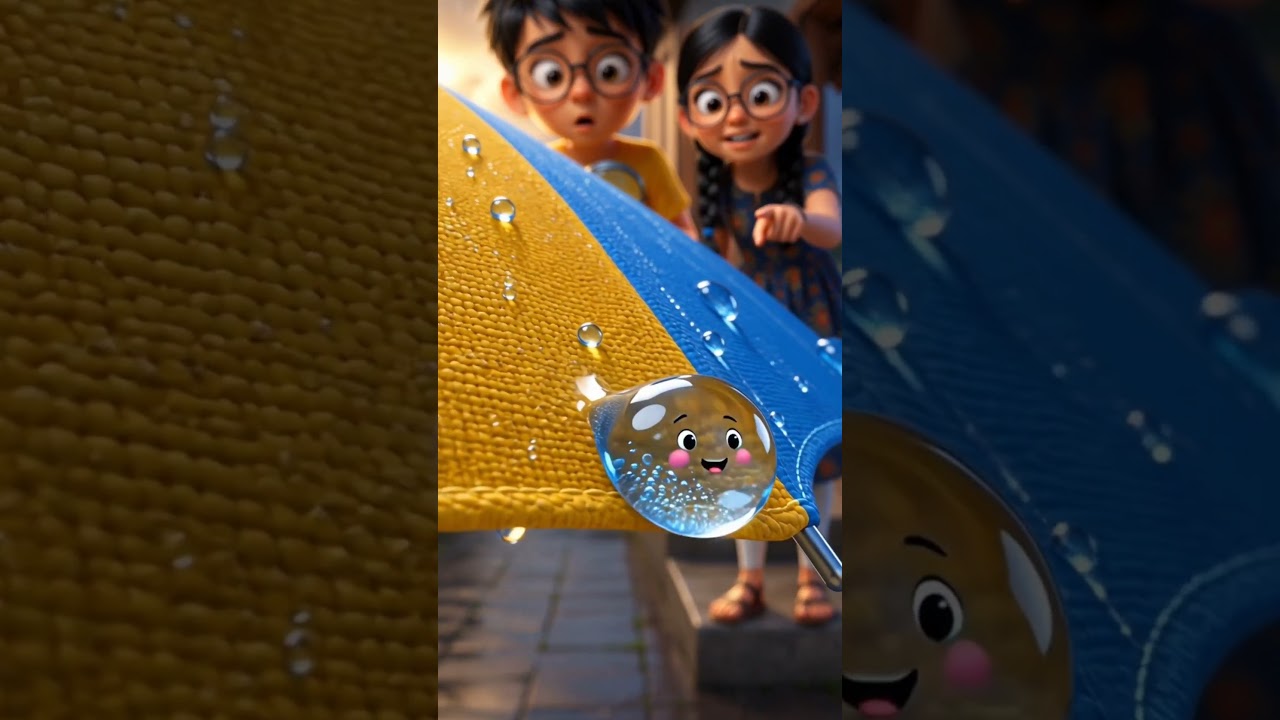
1. The Secret Handshake: What is Surface Tension?
Water molecules love to stay together. In fact, every tiny droplet of water is made up of millions of H₂O molecules clinging tightly to their neighbors.
Because the molecules on the outer edge of a droplet have no water molecules above them, they pull extra hard on the molecules beside and below them. This forms a tight, elastic "skin" around the liquid droplet. Scientists call this Surface Tension.
It’s the reason why raindrops form round spherical beads rather than flattening out into thin sheets when falling through the air!
2. Raincoats vs. Uniforms: Water-Fearing vs. Water-Loving
When water hits a surface, a tug-of-war begins between two main forces:
- Cohesion: Water molecules pulling on each other.
- Adhesion: Water molecules pulling on the fabric surface.
☂️ Hydrophobic Surfaces
(Umbrellas & Raincoats)
Materials used in raincoats are treated with specialized coatings that make them "water-fearing." The fabric refuses to bond with water.
Because the water molecules prefer holding onto each other, cohesion wins. Water beads up and rolls right off!
👕 Hydrophilic Surfaces
(Cotton & School Uniforms)
Natural fabrics like cotton are "water-loving." The fibers contain natural chemical bonds that strongly attract water.
Here, adhesion wins. Cotton fibers pull harder on the water molecules, causing them to let go of their friends and soak in!
💡 Quick Takeaway
- 💧 Surface Tension: Water molecules cling tightly to each other.
- ☂️ Hydrophobic (Water-fearing): Forces water to form beads and roll away.
- 👕 Hydrophilic (Water-loving): Pulls water droplets apart to soak the fabric.
Frequently Asked Questions
Most raincoats are treated with a Durable Water Repellent (DWR) coating. Over time, dirt, body oils, friction from backpacks, and repeated washing wear down this thin chemical layer. When the coating degrades, the underlying fibers become exposed, allowing water to soak in.
Yes! You can apply commercial hydrophobic waterproofing sprays (often made with silicone or fluoropolymers) directly onto cotton or canvas fabrics. The spray coats the individual threads, creating a hydrophobic barrier that prevents water from bonding with the cotton fibers.
Exactly! Small insects, like Water Striders, use surface tension to their advantage. Their light weight and non-wetting, hydrophobic leg hairs allow them to walk across the liquid "skin" created by surface tension without breaking through the water's surface.
- Water-Resistant: Fabric is densely woven to make it hard for water to penetrate, but it will eventually soak through in heavy rain.
- Water-Repellent: Fabric is treated with a hydrophobic coating so water beads up and rolls off, though heavy pressure can still force water through.
- Waterproof: Built with completely impermeable membranes and sealed seams that completely block liquid water, even under heavy water pressure.
Yes! Soap acts as a surfactant (surface-active agent). Soap molecules break the tight bonds between water molecules, significantly lowering surface tension. Hot water also decreases surface tension, which is why hot soapy water is so effective at soaking into clothing to clean dirt!
Comments
Post a Comment